
The Supreme Court on Wednesday deferred the Board of Control for Cricket in India elections till the end of January even as the cricket body opposed the constitution of an external high-powered committee to propose punishment on the Mudgal Committee's findings in the betting and spot-fixing scam in the Indian Premier League.

'There were days when there was no rice at home and we ate only jackfruit seeds.' 'They feel I, a lowliest human being, a tribal, have no right to go abroad and study.' 'The humiliation was so bad that I was broken inside.'

'Everywhere our younger computer professionals are in the forefront, defending our national interest in every forum and keeping our flag flying high.'

The level of political discourse in the country is generally low, but it touches a nadir during election time. You will hear downright lies, half truths, breathtaking exaggerations, and extravagant promises, but never the truth, says Sherna Gandhy.

Anil Divan, who is fighting the black money case in the Supreme Court, speaks to Sheela Bhatt/Rediff.com.

'It is for the first time the voices of the most deferred, the most neglected, the most ignored, the most abused, the most vulnerable - the children-- has been heard. It is a great moment.' 'I always wanted Pakistan and India to have good relationships because I believe that this is very important for the development of both the countries.' 'If children are taught hatred, if they are taught about sectarianism and prejudice, then we can see that there will be terrorism in society." Nobel Peace Prize winners Kailash Satyarthi and Pakistan's Malala Yousafzai were given an ovation after they delivered their rousing speeches in front of a packed audience at a glittering ceremony in Oslo on Wednesday. A day later, they sit down for an interview with CNN's Christiane Amanpour and share their dreams, their hopes for the future. Read excerpts from the interview.

'I can tell you, Mr Chairman, from personal experience that there is nothing sadder than witnessing a close one, a loved one with mental illness at close quarters.' 'I have lived with a victim of mental illness. Like many in that condition, very often such people are in a state of denial.'
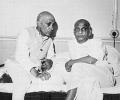
The debate on Sardar Patel's legacy is less about the Sardar and more about the acute sense of threat felt by the Delhi establishment at the rise of Narendra Modi and questions he has raised about the disproportionate share of credit given to a single family, says Colonel (retd) Anil Athale.

After many false starts, India may well be at the inflexion point that Deng Xiaoping took China to post-1978. The window of opportunity is wide open right now, says Rajeev Srinivasan.

'In the merry-go-round of Indian cricket, amid abhorrent match-fixing scandals and incessant politicking, Ravi Shastri is a multifaceted personality who, when called upon, can don any hat with ease.'

'The book was NOT banned. There were NO book burnings. There were NO riots. The author was NOT sent death-threats. On the contrary, the plaintiffs pursued due process. The case is a textbook example of how to proceed with civilised, democratic dissent,' says Rajeev Srinivasan.

'Naik is an outcome of an image-centric Islam, which is linked to the technological changes introduced by new media.' 'English educated upper middle class Muslims embraced Naik's image-centric Islam in the 1990s.' 'Television converted him into a religious object.'

'Smita had it all planned out. She was pregnant then and planning to leave Raj Babbar after the baby was born. In an enthralling new book Smita Patil, A Brief Incandescence (HarperCollins), Maithili Rao reveals the many fascinating facets of the incomparable actress whom we lost too young.

Muzzling NGOs is unbecoming of a democracy. Self-confident democracies encourage, indeed applaud, the involvement of citizens' associations, including NGOs, in social and political decision-making and development planning. Instead, our paranoid government bullies and terrorises them, says Praful Bidwai.

'What hurts people most is dynastic impulses and corruption under a family-ruled Congress party -- and Nehru has borne the brunt of it... I cannot be blinded by how the Nehru family has functioned but just as Gandhi can't be judged by his descendents, why should Nehru?' asks political scientist Ashutosh Varshney.

Few readers will remember the socialist utopia of Indira Gandhi when food queues were the norm even for the middle class and tankers supplied water at odd hours of the night twice a week. Is that what you are trying to return us to, dear Congress, asks Jaideep Prabhu


The year 2014 has been an eventful one for India. The country got a new government and a new state, broke new frontiers in various fields and of course its share of controversies.

Few top honchos of India Inc did very well in 2014.

Chennai Super Kings and Rajasthan Royals were suspended from the Indian Premier League for two years for betting activities of their key officials, Gurunath Meiyappan and Raj Kundra, during the 2013 season of cash-rich Twenty20 cricket tournament.
